What Is Boswellia Ogadensis?
Boswellia ogadensis Vollesen is a rare frankincense-producing species belonging to the Burseraceae family. It is native to Ethiopia and is particularly associated with the Ogaden area of southeastern Ethiopia.
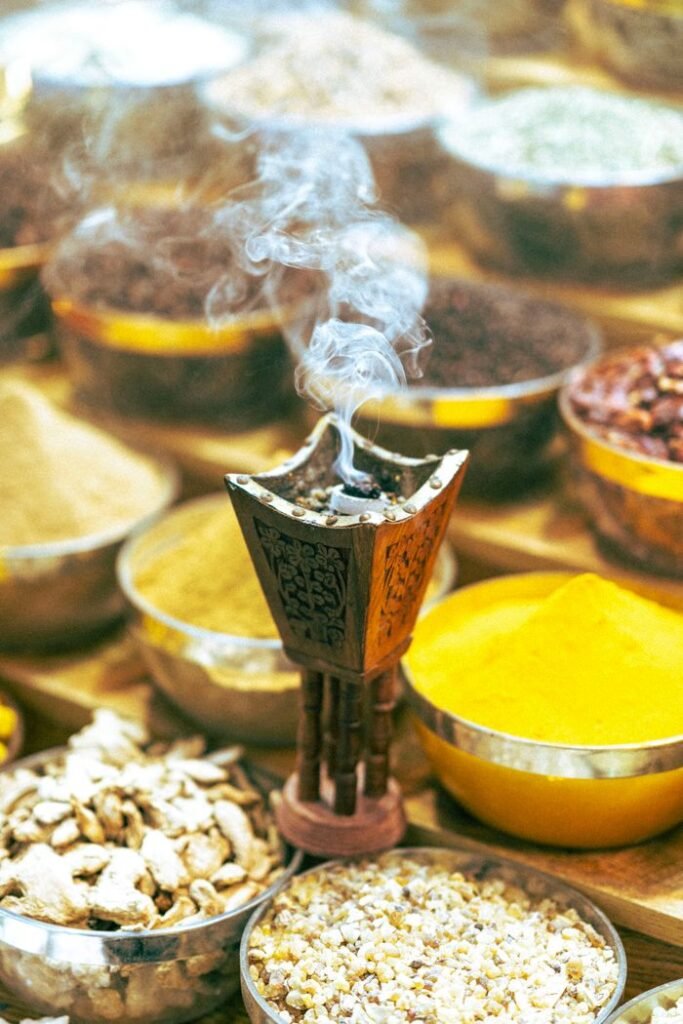
The species produces an aromatic resin belonging to the broader group of natural resins known commercially as frankincense or olibanum.
Unlike more widely distributed frankincense species, Boswellia ogadensis has a highly restricted natural distribution. Botanical and conservation research has documented the species principally in the Shabelle River valley of southeastern Ethiopia.
This restricted distribution makes Boswellia ogadensis scientifically important and also means that commercial sourcing requires considerably greater attention to species identification, origin, traceability and sustainability than is required for more abundant frankincense species.
The species should not be confused with Boswellia rivae, which occurs in the same broader region and is considerably more common.
Where Does Boswellia Ogadensis Grow?
Boswellia ogadensis is endemic to Ethiopia, meaning its natural distribution is known only from Ethiopia.
Scientific botanical records place the species in the Shabelle River valley in southeastern Ethiopia, particularly in the area between Gode and Kelafo.
The species has been associated particularly with gypsaceous hills and rocky, dry terrain. Earlier botanical descriptions reported it growing in Senegalia–Vachellia–Commiphora bushland on stony gypsum hillsides.
This unusual ecological specialization is important because Boswellia ogadensis appears to have a much more restricted habitat than several other Ethiopian frankincense species.
A major field survey conducted in 2022 found the species in more locations than had previously been documented, including populations on both sides of the Shabelle River valley.
The discovery demonstrated that Boswellia ogadensis was more abundant and somewhat more widely distributed within its restricted habitat than earlier records had suggested.
Boswellia Ogadensis and the Ogaden Region
The scientific name ogadensis reflects the species’ association with the Ogaden area of southeastern Ethiopia.
Plants of the World Online maintained by the Royal Botanic Gardens, Kew, recognizes Boswellia ogadensis Vollesen as an accepted species native to Ethiopia.
The species was formally published under the name Boswellia ogadensis in 1985.
Its restricted Ethiopian distribution distinguishes it from frankincense species such as Boswellia sacra, which occurs primarily on the Arabian Peninsula and the Horn of Africa outside Ethiopia, and from Boswellia papyrifera, which has a broader distribution across parts of northeastern Africa.
Local Name of Boswellia Ogadensis
Field research in the Shabelle River valley found that local communities generally did not distinguish Boswellia ogadensis clearly from the more common Boswellia rivae.
Many local people referred to the tree as Mirafur, a name also used for Boswellia rivae.
During the 2022 field survey, one local informant used the modified name “mirafur silon”, described by the researchers as indicating something similar to B. rivae but different.
This overlap in local terminology demonstrates why commercial identification should not rely solely on a vernacular name.
Where accurate species identification is required, the scientific botanical name Boswellia ogadensis Vollesen, geographic origin and appropriate botanical or chemical verification are more reliable.
Boswellia Ogadensis Frankincense Resin
Boswellia ogadensis produces aromatic resin that can be classified botanically as frankincense.
During the 2022 scientific investigation, researchers collected resin from natural exudations on trees at three locations. The trees were not deliberately tapped or damaged for the purpose of collecting the research samples.
The researchers noted that only relatively small quantities of resin were naturally exuding from individual trees, so material from several trees at each location was combined to obtain the research samples.
This observation is commercially important. The existence of frankincense resin on the tree does not automatically mean that Boswellia ogadensis currently supports a large, established commercial resin industry.
Because the species has a restricted distribution and conservation concerns remain, any commercial sourcing should place strong emphasis on legal sourcing, traceability, sustainable collection and correct species identification.
Chemical Composition of Boswellia Ogadensis
One of the most detailed chemical studies of Boswellia ogadensis resin was published in 2022 following fieldwork in the Shabelle River valley.
Researchers analyzed essential oils obtained from resin collected at three separate locations using GC-MS, GC-FID and chiral GC-MS.
The essential oils were dominated by monoterpenes, with very small quantities of sesquiterpenes.
Major compounds reported in the three analyzed samples included:
| Compound | Reported Range |
|---|---|
| α-Thujene | 30.8–46.2% |
| α-Pinene | 3.2–20.9% |
| p-Cymene | 9.0–14.5% |
| Terpinen-4-ol | 5.4–14.8% |
| Sabinene | 3.4–4.9% |
Among these compounds, α-thujene was the dominant constituent in all three samples.
The research demonstrates that Ethiopian Boswellia ogadensis can produce a strongly monoterpene-dominated essential oil with a distinctive chemical profile.
However, these percentages represent specific research samples and should not be presented as guaranteed specifications for every commercial batch.
α-Thujene
α-Thujene was the most abundant compound identified in all three Boswellia ogadensis essential-oil samples examined in the 2022 study.
The three samples contained approximately 30.8%, 37.5% and 46.2% α-thujene.
This makes α-thujene one of the most characteristic major volatile compounds identified so far in scientifically analyzed Boswellia ogadensis resin.
α-Pinene
α-Pinene was another important component, although its concentration varied substantially between the three collection sites.
The analyzed samples contained approximately 3.2–20.9% α-pinene.
In one of the three samples, α-pinene reached 20.9%, making it the second most abundant compound after α-thujene.
This substantial variation illustrates why chemical composition should be verified for individual commercial batches rather than assumed from a single published value.
p-Cymene
p-Cymene was consistently present as another major component of the essential oil.
The three research samples contained approximately 9.0–14.5% p-cymene.
Terpinen-4-ol
Terpinen-4-ol was also an important constituent, occurring at approximately 5.4–14.8% in the analyzed samples.
Together, α-thujene, α-pinene, p-cymene and terpinen-4-ol form an important part of the characteristic volatile profile reported for Boswellia ogadensis.
Essential-Oil Yield of Boswellia Ogadensis
The 2022 study also provides useful experimental information about the essential-oil yield of Boswellia ogadensis resin.
Essential oil was obtained from the three resin samples by hydrodistillation.
| Research Sample | Essential-Oil Yield |
|---|---|
| Sample 1 | 6.08% |
| Sample 2 | 4.18% |
| Sample 3 | 5.63% |
The experimental yields therefore ranged from approximately 4.18% to 6.08% by weight.
The resulting essential oils were described by the researchers as yellow oils.
These results are scientifically useful but should not be interpreted as guaranteed industrial distillation yields. Commercial yields can vary according to resin quality, age, origin, storage, distillation equipment and processing conditions.
Chemical Markers for Identifying Boswellia Ogadensis
An especially interesting result of the chemical research was the identification of compounds that may help distinguish Boswellia ogadensis from other frankincense species growing in the same region.
The researchers identified 3,5-dimethoxytoluene and (Z)-salvene as potentially useful positive chemical markers.
These compounds were detected in the analyzed Boswellia ogadensis samples but were not reported in the commercially harvested sympatric species used for comparison.
The researchers therefore suggested that these chemical markers could potentially help identify whether rare Boswellia ogadensis material had become mixed with commercial resin or essential oil from more common species.
This is particularly relevant because Boswellia rivae resin is collected in the same broader geographic area.
Boswellia Ogadensis vs Boswellia Rivae
Boswellia ogadensis and Boswellia rivae are different botanical species, although they occur in the same broader part of southeastern Ethiopia.
Local terminology can make the distinction difficult because people in areas surveyed by researchers commonly referred to both using the name Mirafur.
| Characteristic | Boswellia ogadensis | Boswellia rivae |
|---|---|---|
| Distribution | Highly restricted; Shabelle River valley of southeastern Ethiopia | More widely distributed in eastern and southeastern Ethiopia and neighboring areas |
| Local name reported | Mirafur; one report of “mirafur silon” | Mirafur |
| Typical research chemistry | Often strongly α-thujene-rich | Often α-pinene-rich, but highly variable |
| Commercial availability | Rare and conservation-sensitive | More commonly collected |
Because the two species occur in the same broader region and may share local names, visual or vernacular identification alone may not always be sufficient for commercial verification.
Botanical identification, traceable collection location and, where necessary, chemical analysis can provide stronger evidence of species identity.
Boswellia Ogadensis vs Boswellia Neglecta
The essential oils of Boswellia ogadensis and Boswellia neglecta can be chemically similar.
Both can contain substantial concentrations of α-thujene, α-pinene, p-cymene and terpinen-4-ol.
However, researchers found potentially useful chemical differences. The analyzed Boswellia ogadensis oils contained 3,5-dimethoxytoluene and lacked linalyl acetate, helping distinguish them from the Boswellia neglecta material used for comparison.
This illustrates why a single compound such as α-pinene or α-thujene should not be used by itself to identify a frankincense species.
Boswellia Ogadensis vs Boswellia Papyrifera
Boswellia ogadensis differs substantially from the commercially important Ethiopian species Boswellia papyrifera.
Boswellia papyrifera occurs primarily in northern and northwestern Ethiopian frankincense-producing areas, whereas Boswellia ogadensis is associated with a restricted area of southeastern Ethiopia.
Their essential-oil profiles are also substantially different.
| Characteristic | Boswellia ogadensis | Boswellia papyrifera |
|---|---|---|
| Ethiopian origin | Southeastern Ethiopia | Northern and northwestern Ethiopia |
| Important areas | Shabelle River valley; Gode–Kelafo area | Metema, Humera, Metekel and other northern/northwestern areas |
| Major essential-oil characteristic | α-Thujene-rich in studied samples | Frequently octyl-acetate-rich |
| Distribution | Highly restricted | Much broader |
This difference is important for buyers because the botanical name “frankincense” does not describe a single chemically uniform raw material.
Conservation Status of Boswellia Ogadensis
Conservation is one of the most important considerations surrounding Boswellia ogadensis.
The species has been assessed as Critically Endangered because of its historically known restricted distribution and threats to its habitat.
However, a detailed 2022 field survey produced encouraging new information.
Researchers found Boswellia ogadensis in more locations than previously documented and concluded that its total population appeared to be larger than previously believed.
The study estimated a known Extent of Occurrence of approximately 405 km², while suggesting that additional populations could potentially increase the known range further.
Some populations, particularly those farther from human settlements, appeared relatively healthy and showed evidence of good regeneration.
Based on these findings, the researchers suggested that a future reassessment from Critically Endangered to Endangered might be justified. However, they also emphasized that further quantitative research is necessary.
Therefore, it would be inaccurate to simply describe the species as “not endangered.” The more accurate statement is that Boswellia ogadensis has been classified as Critically Endangered, while newer field evidence suggests it may be more abundant than previously believed and may warrant reassessment.
Threats to Boswellia Ogadensis
Despite the encouraging discoveries from recent field research, Boswellia ogadensis still faces several environmental pressures.
Researchers documented threats including:
- Livestock grazing
- Suppression of young seedlings
- Cutting of trees and surrounding vegetation
- Habitat degradation near settlements
- Insect attacks
- Damage to bark
- Erosion
Grazing pressure is particularly important because heavy grazing can prevent young trees from successfully developing, even when mature trees remain present.
The intensity of these threats was not uniform. Some populations showed considerable disturbance, while others appeared relatively healthy and were regenerating successfully.
Is Boswellia Ogadensis Commercially Harvested?
This question requires particular care.
Historical sources have associated Boswellia ogadensis with frankincense production, but modern botanical research indicates that the species has a highly restricted distribution and is not clearly documented as supporting a large independent commercial supply chain.
The 2022 researchers collected resin from natural exudations rather than from commercially tapped trees.
They also raised the possibility that resin from Boswellia ogadensis could be collected unintentionally and mixed with resin from the much more common Boswellia rivae.
Therefore, commercial material should not be advertised as verified Boswellia ogadensis solely because it originates from Ethiopia’s Somali Region or because a local supplier calls it Mirafur.
For verified commercial supply, botanical identity and collection origin should be established before the resin is marketed as Boswellia ogadensis.
Potential Uses of Boswellia Ogadensis
Natural Frankincense and Incense
The resin produced by Boswellia ogadensis is an aromatic frankincense resin and can potentially be used as natural incense.
However, because of the species’ conservation significance, commercial use should depend on confirmed sustainable and legally appropriate sourcing.
Essential-Oil Production
Scientific research demonstrates that the resin contains a substantial volatile fraction that can be recovered through hydrodistillation.
The experimentally measured essential-oil yields of 4.18–6.08% demonstrate its potential as an aromatic raw material, although these research values should not be interpreted as guaranteed industrial yields.
Fragrance and Aromatic Research
The unusual α-thujene-rich chemical profile makes Boswellia ogadensis scientifically interesting for fragrance chemistry and aromatic-material research.
Its combination of α-thujene, α-pinene, p-cymene, terpinen-4-ol and other volatile compounds distinguishes it chemically from several other Ethiopian frankincense species.
Botanical and Phytochemical Research
Because Boswellia ogadensis is an Ethiopian endemic with a restricted geographic range, it has particular value for botanical, ecological, conservation and phytochemical research.
Research on the species can also improve methods for authenticating frankincense and identifying accidental mixing between different Boswellia species.
Quality and Identification for International Buyers
For buyers evaluating material represented as Boswellia ogadensis, species verification is especially important.
Relevant information may include:
- Scientific name: Boswellia ogadensis Vollesen
- Country of origin: Ethiopia
- Specific collection region
- Traceability to collection area
- Resin appearance and aroma
- Moisture content
- Foreign matter
- Purity
- Essential-oil yield, where tested
- GC-MS chemical profile, where required
- Evidence of sustainable sourcing
Where botanical authenticity is particularly important, a representative sample should be evaluated before a large commercial purchase.
Laboratory Analysis and Documentation
Depending on the intended application, laboratory testing of Boswellia ogadensis resin may include:
- Moisture content
- Ash
- Foreign matter
- Purity
- Essential-oil yield
- GC-MS essential-oil composition
- Heavy metals, where required
- Microbiological testing, where relevant
- Species-authentication markers where appropriate
Commercial documentation may include a Certificate of Analysis (COA), Technical Data Sheet (TDS), Safety Data Sheet (SDS/MSDS), Certificate of Origin, Phytosanitary Certificate where required, Commercial Invoice and Packing List.
For Boswellia ogadensis, documentation of the collection location and traceable botanical identity can be especially important because of the species’ restricted distribution and similarity to other frankincense species from southeastern Ethiopia.
Sustainable Sourcing of Boswellia Ogadensis
Any development of a commercial supply chain for Boswellia ogadensis should place conservation at the center of the sourcing strategy.
The species occurs naturally in a limited geographic area and continues to face pressures including grazing, habitat degradation, cutting and insect damage.
At the same time, recent research has identified populations with healthy regeneration, demonstrating that conservation conditions differ substantially between locations.
Responsible sourcing should therefore be based on verified populations, appropriate harvesting practices, traceability, regeneration monitoring and compliance with applicable Ethiopian conservation and export requirements.
For a rare endemic species, commercial value should support rather than undermine the long-term survival of the natural resource.
Ethiopian Boswellia Ogadensis and International Buyers
Ethio Resins Export PLC works with Ethiopian natural-resin supply chains and recognizes the importance of correct botanical identification when supplying different Ethiopian frankincense species.
Boswellia ogadensis requires particular care because it is a rare Ethiopian endemic and should not be treated as interchangeable with the more abundant Boswellia rivae.
Any material offered specifically as Boswellia ogadensis should therefore have appropriate evidence supporting its species identity, geographic origin, traceability and sustainable collection.
Where technical characteristics are required by a buyer, representative samples and batch-specific laboratory analysis can be used to evaluate essential-oil yield and chemical composition.
Conclusion
Boswellia ogadensis Vollesen is one of Ethiopia’s most distinctive frankincense-producing species.
It is endemic to Ethiopia and is particularly associated with the Shabelle River valley of southeastern Ethiopia, including the area between Gode and Kelafo.
Scientific analysis of naturally exuded resin has shown an essential oil dominated by monoterpenes, particularly α-thujene, α-pinene, p-cymene and terpinen-4-ol.
Research samples produced essential-oil yields of approximately 4.18–6.08%, while chemical analysis also identified potential markers that may help distinguish Boswellia ogadensis from other frankincense species growing in the same region.
Although the species has been classified as Critically Endangered, recent field research found more populations and better regeneration than previously known. Researchers consequently suggested that reassessment may eventually be appropriate, although further study is required.
For international trade, Boswellia ogadensis should therefore be approached as a rare, geographically restricted and conservation-sensitive Ethiopian frankincense species. Accurate botanical identification, traceable origin, laboratory verification and sustainable collection are particularly important when material is offered commercially.